Cooper Delivered · Hair Lab · Case File #008
Does Your Hair Really Change With the Seasons?
A hairdresser investigates what spring actually does to your hair.
Claire hadn’t changed her shampoo.
She hadn’t bought a new conditioner.
She hadn’t deliberately changed her hair routine at all.
And yet, when spring arrived, her hair didn’t feel quite the same.
So what changed?
Quite a lot, actually.
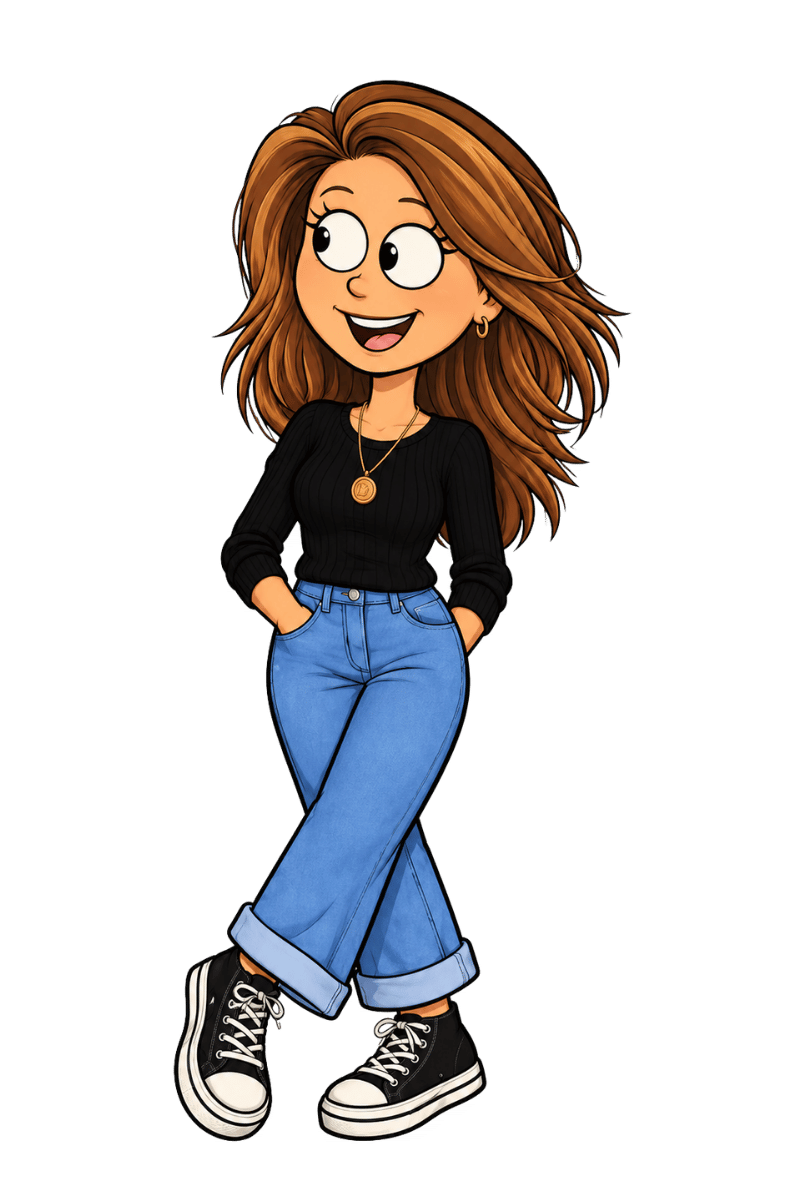
Meet Claire
Claire is 46.
She’s a gardener.
The moment the weather begins warming, you’ll find her outside.
Through winter, Claire’s hair routine had been working beautifully.
She knew when she liked to wash it.
She knew how much conditioner she needed.
Her scalp felt comfortable.
Her lengths behaved.
Then spring arrived.
Suddenly she’s gardening more.
She’s spending longer outside.
The days are warmer.
She’s sweating more.
Her hair goes into a ponytail while she’s working.
A hat goes on.
The hat comes off.
The wind gets hold of the ends.
She washes more often because after a day outside, sometimes she simply wants to wash her hair.
And she’s getting considerably more sun and weather exposure than she did during winter.
But as far as Claire is concerned, she hasn’t changed anything.
She’s still using the same shampoo.
So when she sits in my imaginary Hair Lab chair, she asks:
“Why has my hair changed when I haven’t changed anything?”
And my hairdresser answer is:
But Claire, you have changed something.
Your life.
Does hair actually change with the seasons?
Let’s get one thing out of the way first.
Your hair doesn’t know September has arrived.
It doesn’t look at the calendar and announce:
Spring! Better buy a spring shampoo.
That’s marketing language.
Hair Lab wants to ask a different question.
What has actually changed?
Because when seasons change, the conditions surrounding our hair and scalp can change too.
Temperature.
Humidity.
Sun and UV exposure.
Time outdoors.
Sweating.
Swimming.
Washing frequency.
Styling habits.
Wind.
Friction.
None of those automatically means Claire needs a new product.
But they’re all information I’d want during a consultation.
So instead of asking:
“What shampoo should I use in spring?”
I’d rather ask:
“What has actually changed for my hair?”
Claire’s hair hasn’t read the calendar. It has met the environment.
This is where the phrase “seasonal hair” can become misleading.
Spring itself isn’t necessarily the mechanism.
Exposure is.
For Claire, spring means hours in the garden.
For someone working inside an air-conditioned office, spring might change very little about their daily hair exposure.
Someone swimming several times a week as the weather warms introduces another set of variables.
Someone living in humid northern Australia isn’t necessarily experiencing the same spring conditions as someone living in southern Western Australia.
Even two people living next door to each other can have completely different routines.
One spends Saturday outside gardening.
The other spends Saturday on the couch watching Netflix.
Same season.
Very different hair day.
Seasonal haircare should be personal, not prescribed by the calendar.
What can sunlight actually do to hair?
Now we’re getting properly Hair Lab.
The visible hair shaft is keratinised, non-living material.
But there’s an important distinction here:
Dead fibre doesn’t mean indestructible fibre.
Your hair can still undergo physical and chemical weathering after it has emerged from the scalp.
Scientific literature examining sunlight and ultraviolet exposure has described changes involving hair proteins, pigments and lipids, as well as the surface and mechanical properties of the fibre.
With sufficient exposure, researchers have reported effects including:
- increased surface roughness
- changes affecting the cuticle
- degradation of some hair proteins
- pigment changes and colour fading
- changes in mechanical strength
- increased brittleness and dryness
Now, before anyone hides indoors until winter:
I’m not telling Claire to be frightened of the sun.
I’m definitely not telling her to give up her garden.
Normal outdoor life isn’t something to fear.
What I’m saying is that if Claire spends substantially more time outdoors in spring than she did through winter, that exposure belongs in the consultation.
It becomes one piece of the puzzle.
Your hair is dead fibre. That doesn’t mean nothing can happen to it.
Humidity isn’t just about frizz
Humidity gets reduced to one word in beauty conversations:
Frizz.
But there’s more happening than that.
Hair interacts with water in its surrounding environment.
Research examining human hair mechanics has found that relative humidity affects the mechanical behaviour of the fibre.
In simple hairdresser language:
Changing atmospheric moisture can change how hair behaves.
For some people, that may show up as more frizz.
For someone else, curls or waves may behave differently.
A smooth style might not hold the same way.
Hair may simply feel less predictable than it did under different conditions.
But we need to be careful with another internet shortcut:
Humidity makes everyone’s hair frizzy.
Not necessarily.
Remember Priya from Case File #007?
Individual fibres aren’t identical.
Neither are people’s colour histories, chemical treatments, styling habits or existing hair condition.
Same weather doesn’t guarantee the same response.
Claire says her hair is getting oilier
Now I’m putting my hairdresser hat properly back on.
Claire tells me:
“My hair gets oily faster in spring.”
Okay.
But what does “oily” mean in Claire’s case?
Is her scalp producing more sebum?
Or is she noticing the combination of:
- more sweating
- longer periods outdoors
- wearing a hat
- more styling or hair products
- different washing habits
- scalp sebum
- dirt and environmental residue
Because there’s an important distinction here.
Sweat and sebum aren’t the same thing.
Sebum is the oily material produced by sebaceous glands associated with our hair follicles.
Sweat comes from sweat glands.
But Claire doesn’t come home from gardening and experience each substance separately in a laboratory.
She experiences a scalp that feels sweaty, greasy, dirty or uncomfortable.
That’s what matters to her.
Scalp hygiene guidance also recognises that sebum, sweat, dead skin, dirt and product residue can accumulate on the scalp.
So Hair Lab doesn’t hear:
“My hair feels oily.”
and immediately diagnose the problem.
We ask more questions.
“But isn’t washing your hair more often bad?”
This is one of those hair rules I’d quite happily throw out of the salon window.
You’ve probably heard:
Only wash your hair once a week.
Or twice.
Or every third day.
Or whatever number happens to be circulating online this week.
But whose scalp are we talking about?
Whose hair?
Whose lifestyle?
If Claire has spent hours gardening on a warm spring day and her scalp is sweaty and uncomfortable, I’m not going to tell her:
Sorry, Claire. You already used Tuesday’s allocated shampoo.
There is research challenging the assumption that frequent washing is automatically harmful.
For example, a 2021 study examining Asian participants without specific scalp disease found better scalp and hair outcomes at higher washing frequencies within the populations studied.
But Hair Lab isn’t turning that into another universal rule either.
The study population matters.
The products used matter.
And the research was fully funded by a shampoo manufacturer.
So I’m not taking one study and announcing:
EVERYONE MUST WASH THEIR HAIR DAILY.
That would be replacing one oversimplification with another.
Instead:
Wash according to your scalp, your hair, your activity and how your routine actually behaves.
And perhaps most importantly:
There is no moral achievement unlocked by going seven days without washing your hair.
Your scalp isn’t handing out medals.
Spring changes how Claire handles her hair too
Not every part of this investigation needs a microscope.
Sometimes I just need to watch what Claire does with her hair.
She’s gardening.
Hair goes up.
Hat goes on.
Hat comes off.
Ponytail goes back in.
She’s sweaty, so perhaps she ties it back again.
The wind gets hold of it.
She brushes out the tangles.
She washes it.
Then tomorrow, we start again.
Hair weathering isn’t only chemical.
Repeated grooming, friction, combing and other mechanical forces contribute to the gradual weathering of the hair fibre too.
So when Claire says:
“My ends suddenly feel rough.”
I’m not going to stop investigating the moment someone says:
It’s spring dryness.
Maybe sunlight is part of it.
Maybe wind and tangling are part of it.
Maybe she’s brushing more.
Maybe she’s washing more.
Maybe her ends were already weathered before spring arrived.
Maybe it’s several things at once.
Investigate before naming the culprit.
Hairdresser tip: don’t punish tangled hair for becoming tangled
This one’s wonderfully simple.
If Claire comes inside after gardening and the wind has tangled her hair, she doesn’t need to attack it with a brush.
Start at the ends.
Work gradually upwards.
Hold the hair above the section you’re detangling so you’re not unnecessarily pulling against the scalp.
If the hair needs slip, use conditioner to help rather than trying to win the argument with brute force.
Gentle handling is haircare too.
Your scalp and your ends can tell two completely different stories
This is probably the most important part of Claire’s consultation.
Claire can have:
a scalp that needs effective cleansing
while simultaneously having:
older lengths that need conditioning.
There is nothing contradictory about that.
The hair close to Claire’s scalp is relatively new.
If her hair is long, the ends have potentially been around for years.
They’ve experienced more washing.
More brushing.
More sunlight.
More heat styling.
More friction.
More colouring, if she colours her hair.
More life.
So instead of asking:
“Does Claire have oily hair or dry hair?”
I’d rather ask:
“Which part of Claire’s hair are we talking about?”
That’s a much more useful place to start.
If Claire sat in my chair…
Now, and only now, do we start talking products.
Because I’m not building:
THE OFFICIAL SPRING HAIR ROUTINE.
I’m building Claire’s routine.
If her increased activity, styling products or accumulated residue mean her scalp needs a more cleansing-focused wash at appropriate times, that’s where I’d consider our Detox Shampoo Bar.
If her lengths need more moisture and conditioning support, we could look at our Hydration Shampoo Bar.
Then our Conditioner Bar can be concentrated through the areas that actually need conditioning, usually the mid-lengths and ends rather than automatically loading the roots.
Claire may alternate shampoos.
She may change how often she washes.
She might discover the products are perfectly fine and all she really needs to change is how she’s applying them.
That’s why I’ve always liked a simple two-shampoo, one-conditioner philosophy.
Not because everybody needs to use three products at every wash.
Because one head of hair can have more than one need.
The answer isn’t:
BUY MORE PRODUCTS. IT’S SPRING.
The answer is:
Adjust what you’re doing when the evidence gives you a reason to.
Do you need to spring clean your hair routine?
Yes.
But I’m not talking about emptying your bathroom cupboard.
I’m talking about auditing the routine.
What’s working?
Keep it.
What’s changed?
Investigate it.
Am I washing differently?
Ask why.
Am I spending more time outside?
Include that in the picture.
Is my scalp actually the problem, or is it my lengths?
Separate them.
Have I coloured or lightened my hair?
That belongs in the consultation too.
Am I styling differently?
Look at what your hair is experiencing every day.
What does my hair actually feel like?
Not what an advert says spring hair is supposed to feel like.
Your hair.
Right now.
That’s my version of spring cleaning.
Reassessment, not consumption.
Three case files. One bigger lesson.
Claire’s case completes something we’ve been building inside Hair Lab.
In Case File #006, Rachel taught us:
Your environment matters.
In Case File #007, Priya taught us:
Someone else’s perfect routine isn’t necessarily yours.
And now Claire teaches us:
Even your own needs don’t necessarily remain identical forever.
That’s the bigger Hair Lab lesson.
Good haircare isn’t about finding one perfect routine and blindly following it forever.
It’s about understanding what your hair needs now.
The Hair Lab Verdict
Your hair doesn’t need a new routine because the calendar says spring.
But when your environment, lifestyle, scalp or hair changes, your routine deserves another look.
Look at your scalp.
Your washing.
Your environment.
Your outdoor exposure.
Your styling.
Your hair condition.
Your life.
Then adjust what actually needs adjusting.
Don’t follow the season.
Follow the evidence.
HAIR LAB
Real people. Real consultations. Real hair science.
Has your hair actually changed this spring?
Don’t start with the shopping cart.
Start with the consultation.
What changed?
Maybe your scalp needs a different cleansing rhythm.
Maybe your older lengths need more conditioning.
Maybe your technique needs adjusting.
Maybe your existing routine is still working beautifully and you don’t need to change a thing.
That’s the point.
Understand your hair first.
Then choose intentionally.
Make It Ritual.